Projects
Kingfish Newsletter #4

Collection of kingfish heads and lengths is being finalised in Northland/ Hauraki Gulf.  We have exceeded the target number of otoliths and lengths for this region.  Thanks to those fishers in the region who have participated.

Read more...
 
Kingfish Newsletter #3

This kingfish research project is the largest of its kind to be undertaken in New Zealand, and will provide valuable information about your fishery.  We now have over 520 kingfish lengths and 240 kingfish heads in the data-base, with more forms and samples yet to collect.  This a good start to achieving the target of 2000 kingfish lengths and 500 kingfish heads from the North Cape to Cape Runaway survey area.

Read more...
 
Kingfish Newsletter #1

The first full scale project to monitor the kingfish stocks in north eastern New Zealand is underway. A pilot study conducted by NIWA in the Bay of Plenty in 2002-03 showed that recreational fishers could provide a good sampleof length and age of the kingfish population. Fishers have been saying that there are good numbers of kingfish around across the size range. Collecting hard data on these fish will provide a baseline for future monitoring. Fifty five fishers have been recruited to provide data.

Read more...
 
Kingfish Stock Monitoring 2010

Information on the size and age of yellowtail kingfish from North Cape to Cape Runaway is being collected to monitor the current state of the stock in northern New Zealand.

Recreational charter and private fishers are being asked to measure their catch and help collect otolith bones for aging.Targeted recreational fishing is the only method that is likely to catch a representative range of all adult kingfish sizes.

Read more...
 
Scallop & Rock Lobster Harvest

B_ramp2Estimates of the non-commercial catch are important to improve the monitoring and sustainable management of fish stocks, especially for the main species caught. The Ministry of Fisheries has information from various surveys of amateur catch. Most of this is from fisher diary surveys and more recently aerial overflight surveys. Fisheries managers have asked for a more intensive survey of scallops and rock lobster in eastern Coromandel to improve the catch estimates obtained from the diary surveys.

Read more...
 
Striped marlin satellite tagging

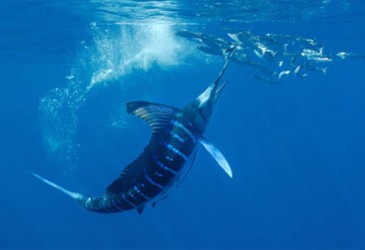
PSAT marlinBlue Water Marine Research began using electronic tagging technologies in 2003 to investigate striped marlin from New Zealand’s recreational fishery. Advances in satellite tagging technologies has enabled detailed movements and behaviours of striped marlin in the southwest Pacific Ocean to be revealed. These data are helping to better understand how striped marlin movements and behaviours are related to the environment they live in. The success of those first efforts have led to an ongoing striped marlin satellite tagging program and expansion into electronic tagging of other species including swordfish and bluefin tuna.

Read more...
 
Billfish logbooks

FREE LOGBOOK AND BILLFISH TAGS

We have developed a logbook for recreational fishers targeting billfish that collects valuable information on catch and fishing effort during the season, December through May. See the details of where and when catch rates were best and register your interest for the 2009/10 season.

Read more...
 
Striped marlin fisheries in New Zealand

Striped marln with satellite tagStriped marlin are one of a range of large oceanic pelagic species caught by recreational and commercial fishers in New Zealand waters. Generally, striped marlin are most abundant in summer and autumn, and northern New Zealand has a long established recreational target fishery for striped marlin. The largest striped marlin caught on rod and reel all come from New Zealand waters. The International Game Fish Association keeps records and 16 of the 22 striped marlin line class world records are held by anglers in New Zealand, including all the heaviest fish caught on line from 6 kg to 60 kg breaking strain.

Read more...
 
Satellite tracking of broadbill swordfish

Broadbill swordfish being tagged Swordfish do not breed in New Zealand waters. During the austral spring they move to warmer subtropical spawning grounds. For the first time electronic tags that store and transmit information on the temperature, depth and location have been attached to New Zealand swordfish. These are helping to reveal possible spawning locations and whether these fish subsequently return to New Zealand or disperse more widely.


Read more...
 
Recreational snapper survey

For two years we have gathered information of the size and condition of snapper (Pagrus auratus) caught and released by recreational fishers in north eastern New Zealand. This is the largest recreational fishery in the country and over 19,000 snapper have been measured in this Ministry of Fisheries funded survey. 58% of all snapper caught were released.

Read more...